

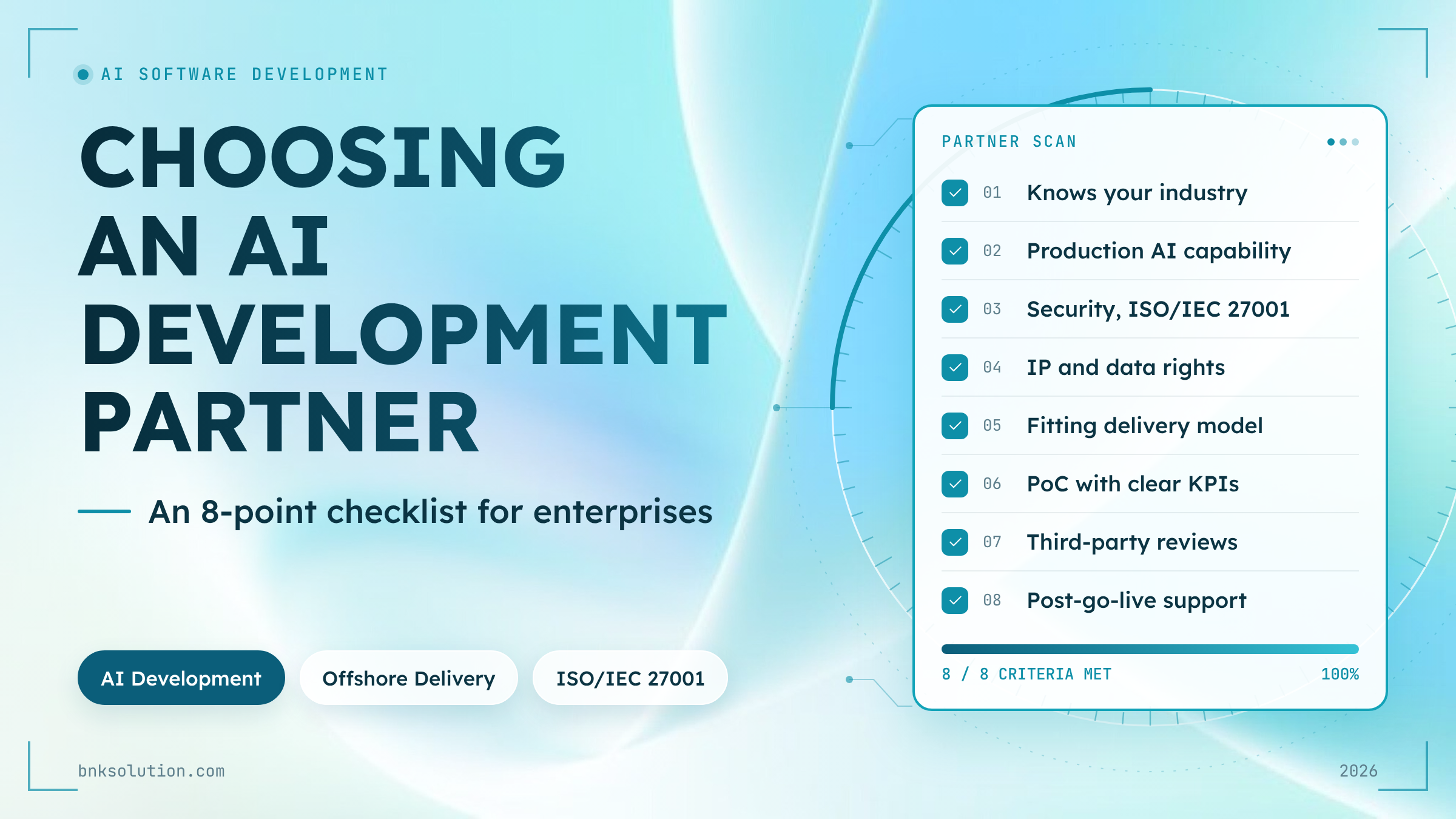
In an AI project, choosing the right partner matters as much as choosing the right technology. An impressive demo or an attractive quote does not tell you whether a partner can put AI into real operation, protect your data and stay with you until the system is stable. That is why, when choosing an AI software development company, enterprises should assess it against eight criteria: industry knowledge, production AI capability, ISO/IEC 27001 security, clarity on IP and data, a fitting delivery model, a PoC with clear KPIs, client references and post-go-live support.
When should a company use an AI development partner?
A partner makes sense when you need AI in production soon but your team lacks specialist skills such as computer vision, large language models (LLMs) or MLOps. If AI is a core capability to nurture over the long term and you already have solid data foundations, building in-house is the better fit
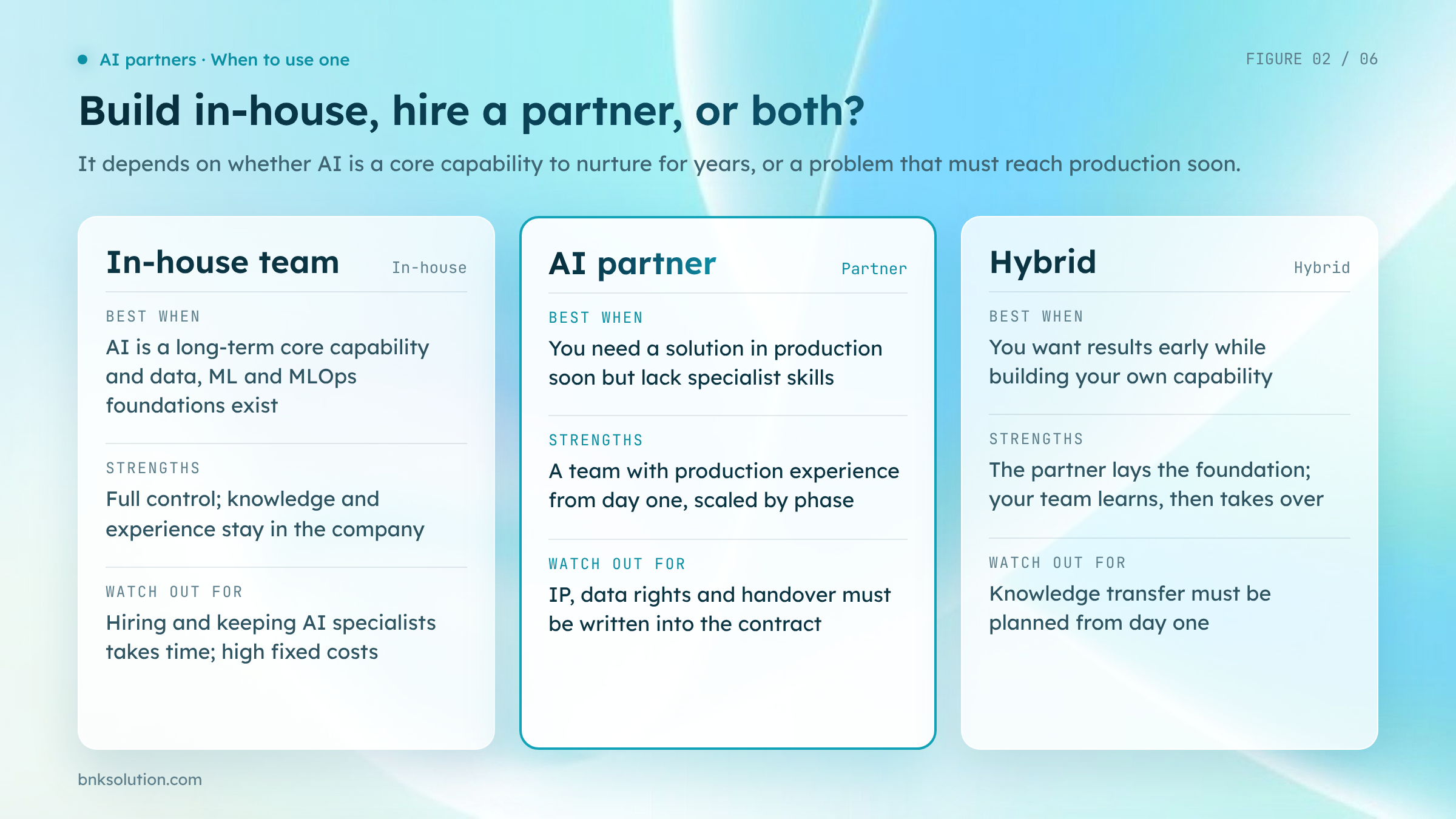
Figure 1 Build in-house, hire a partner or combine both: each fits a different situation
In practice, it is rarely an either-or choice. Hiring a full AI team often takes months, and the business problem cannot wait that long. Many companies therefore take a hybrid route: the partner builds the foundation and runs the first PoC, while the internal team works alongside, learns and gradually takes over. In that model, the partner's ability to transfer knowledge becomes a criterion worth weighing from day one.
8 criteria for choosing an AI software development company
The eight criteria below help you look beyond what a partner presents in the first meeting. For each one, what counts is not a "yes" but the evidence behind it: documents, systems in operation or a client willing to share their experience
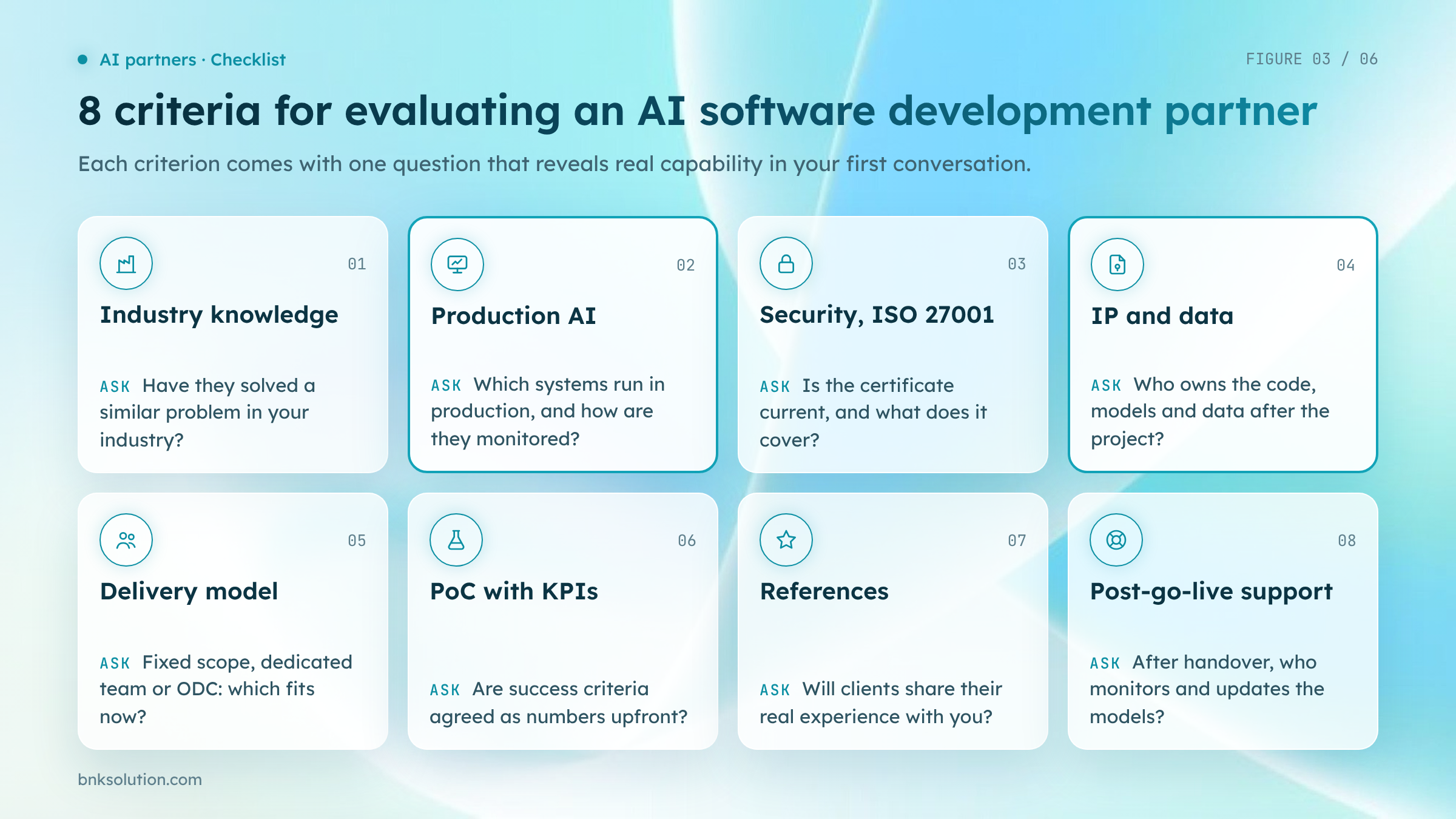
Figure 2. Eight criteria for evaluating an AI partner, and the question to ask for each
1. Knowledge of your industry
AI may be the same technology, but every industry has its own data, rules and measures of success. In banking, documents must be checked against strict business rules, and any discrepancy can become a compliance risk; in a factory, the system has to stay reliable in a production environment that keeps changing. A partner new to the industry needs time to learn these constraints, and that time is usually billed to your project.
BnK can point to hands-on experience in both settings. In delivering an AI suite for letter of credit processing at a bank in Vietnam, the team worked directly with trade finance documents and the bank's specific control requirements. In the camera-based robot management system for a factory, the challenge was reliability and connectivity on the production floor. Having been through these contexts, BnK can get up to speed with a client's business quickly and anticipate issues that a first-time partner in the field might miss.
2. Production AI, not just demos
The gap between a demo and a live system is wider than most people expect. Demos usually run on curated data, while production must handle blurry documents, missing fields and unseen exceptions, integrate with core systems and be monitored continuously. So ask which systems are running in production and how their accuracy is tracked.
A partner with its own AI product usually answers that question most convincingly. BnK IDP, the intelligent document processing platform developed by BnK and recognised with a Sao Khue 2025 award, is one example. For a product like this to work on real business documents, the team has to go through the full lifecycle from data and models to operations, and that experience underpins its client projects.
3. Security and ISO/IEC 27001
AI projects almost always touch sensitive data, from customer records to financial documents. ISO/IEC 27001 should therefore be the minimum bar, and the points to check are whether the certificate is current and whether its scope covers the team working on your project.
At BnK, information security runs as a management system certified to ISO/IEC 27001, alongside a quality management system under ISO 9001:2015. This gives your security team a ready basis for due diligence instead of starting the assessment from scratch.
4. IP and data rights
Ownership in AI is more complex than in ordinary software because there are three layers of assets: source code, trained models and training data. The contract should state which layers are transferred and which are licensed, where data is stored and whether it may be used to train models for other clients. These terms are easy to skim in negotiation and the most likely to cause disputes later, so have your legal team review them before signing.
5. A delivery model that fits
Each stage of a problem suits a different way of working. Fixed-scope projects fit clear requirements; dedicated teams or ODCs fit products that evolve continuously; specialist engineers fit when only one skill is missing. The wrong model tends to trap a project in change requests or wasted capacity.
BnK's engagement options follow the same logic: start with an assessment or PoC while the problem is new, move to full implementation once results are proven, and add dedicated engineers or specialist teams when you need to scale. That way, you do not have to make a large commitment on day one.
6. Willingness to run a PoC with KPIs
A PoC is the most economical way to see what a partner can do with your real data, but only when success criteria are fixed as numbers before it starts, such as extraction accuracy or handling time per case. A PoC that ends with "the results look promising" will not help leadership make a decision.
That is why PoC is a distinct engagement option in how BnK works with clients: you validate the value on your own data, against your current baseline, before deciding to invest in implementation.
7. Independent reviews and client references
A capability deck tells you how a partner wants to be seen; a reference tells you how it actually works. When you talk to references, ask not only how the project ended but how the partner handled problems and changing requirements, because that is when real capability shows. You can also look at the clients BnK has worked with before going into detailed discussions.
8. Support after go-live
Acceptance is not the finish line for an AI project. As real-world data changes, from new document templates to new products, a model gradually loses accuracy if no one is watching it. Agree early on who monitors accuracy, when models are retrained and what post-handover support covers. If you plan to run the system yourself later, the knowledge transfer plan belongs here too.
What are the red flags when choosing an AI partner?
Watch for six signs: accuracy promised before seeing data, demos only, vague IP terms, reluctance to run a PoC with clear criteria, no clarity on where data is stored and no plan after go-live. One flag is not an automatic no, but it is a question that needs evidence before you sign
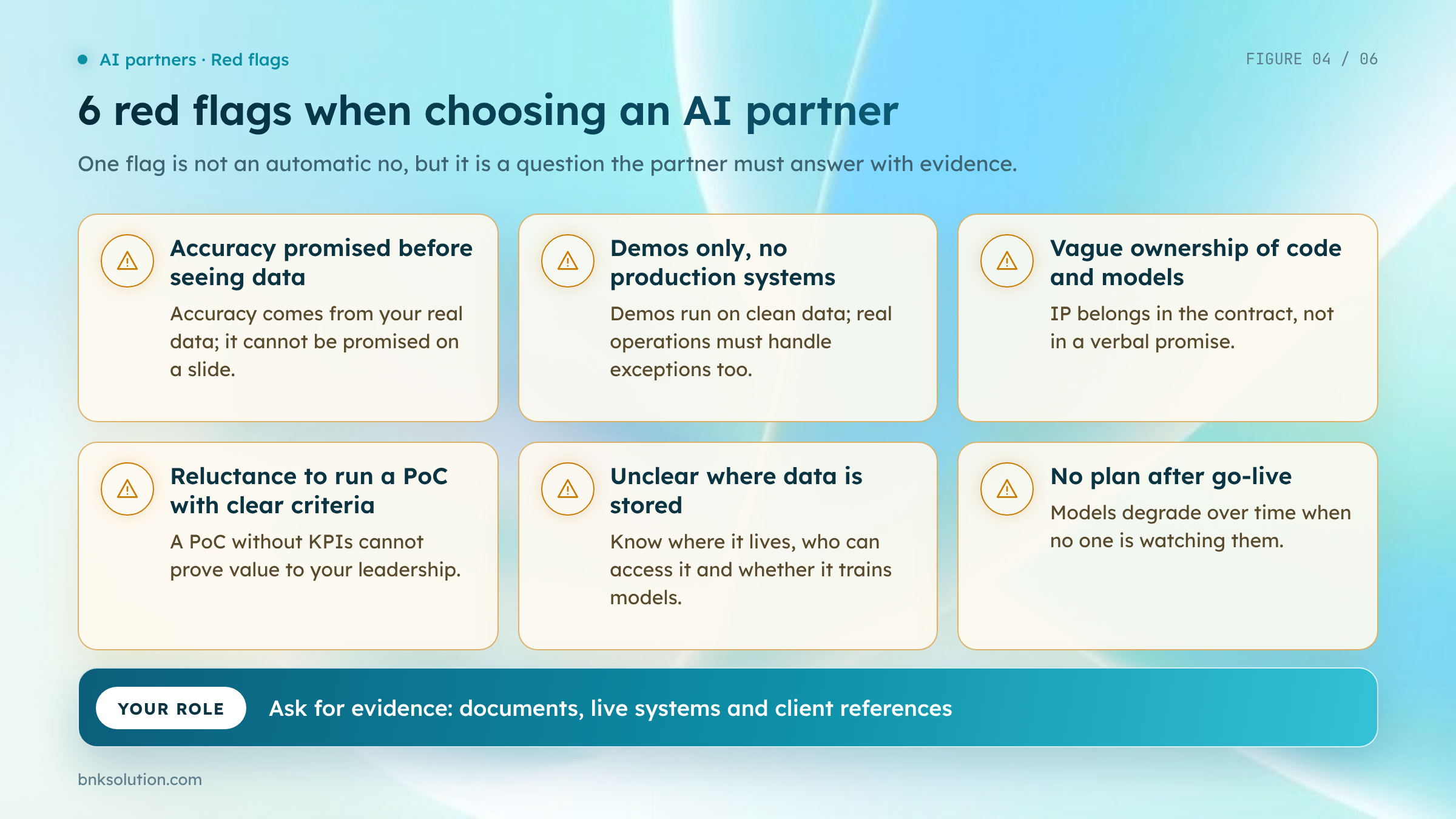
Figure 3. Six red flags to clear up before signing with an AI partner
The easiest to spot is a "99% accuracy" pledge in the first meeting. Because accuracy depends on your own data, a trustworthy partner will explain what data it needs, how results will be measured and where the solution's limits are, rather than quoting a number upfront.
What does an AI partner evaluation process look like?
To turn the eight criteria into a concrete decision, you can follow four steps. Each step removes a layer of risk before you commit an implementation budget
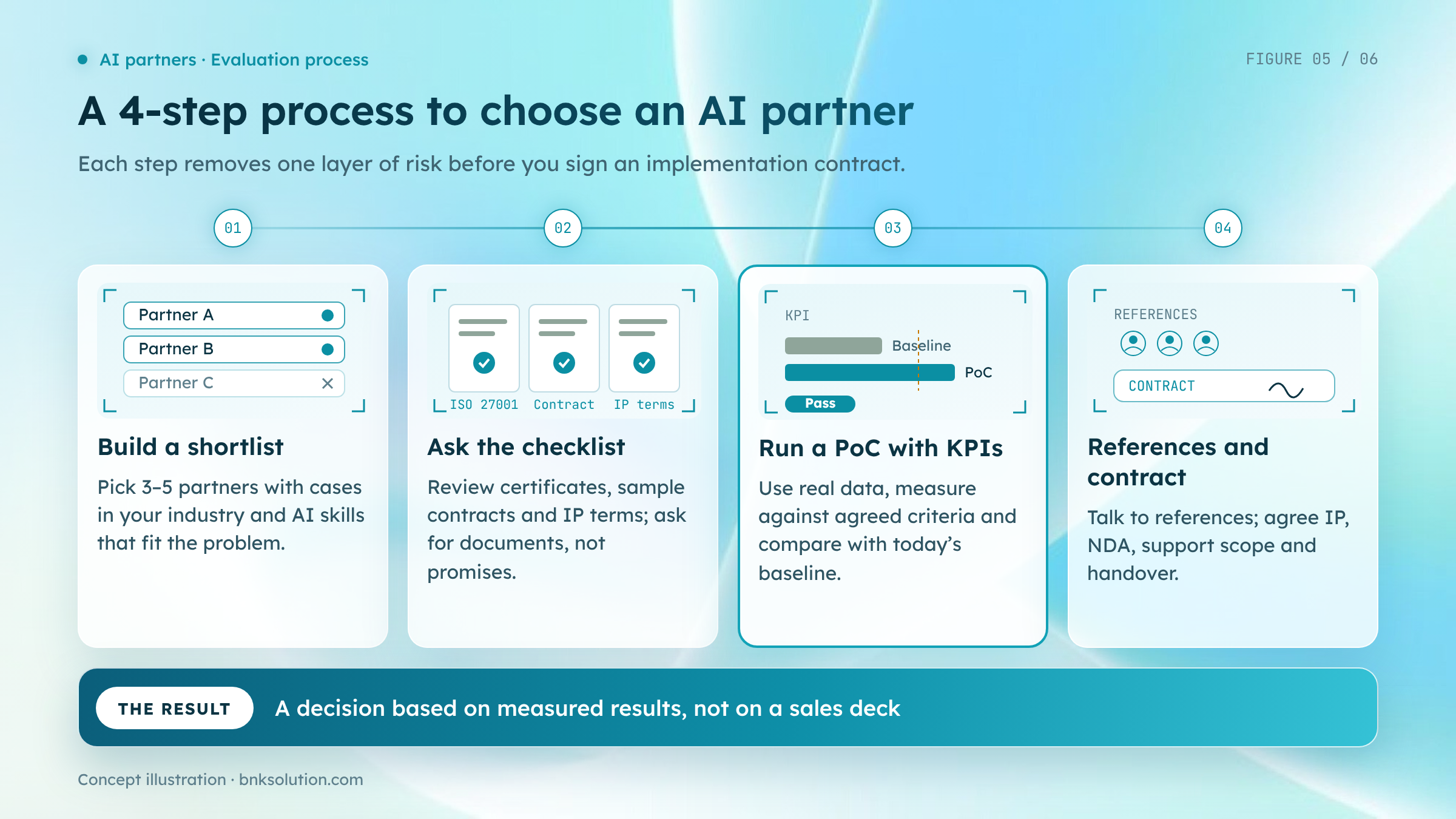
Figure 4. A 4-step process for choosing an AI partner based on measured results (concept illustration)
Build a shortlist: 3–5 partners with cases in your industry and fitting AI skills.
Ask the checklist: check against the 8 criteria; request certificates, a sample contract and the IP and data terms.
Run a PoC with KPIs: use real data, measure against agreed criteria and compare with your baseline.
References and contract: talk to references, then agree IP, NDA, support scope and the handover plan.
PoC duration and cost depend on the problem's scope and data readiness, so they are defined after the first conversation.
Why do companies choose Vietnam for AI development?
When considering Vietnam, companies in Japan, Asia and Europe usually weigh four factors: young engineering talent used to new technologies, competitive cost, time zones close to Japan and Asia, and flexible engagement models from fixed-scope projects to ODCs
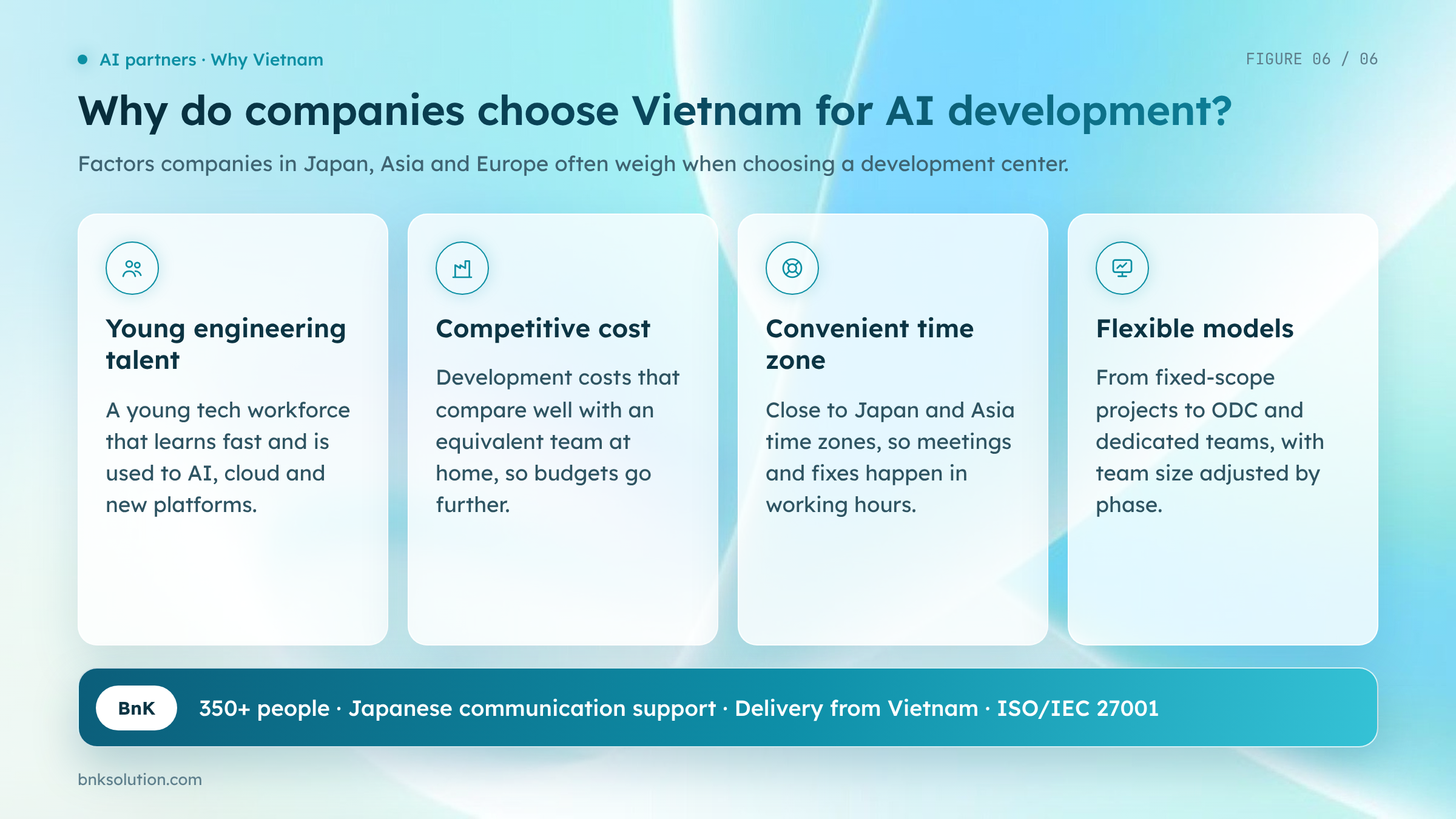
Figure 6. Four factors companies weigh when choosing Vietnam as an AI development center
Still, a country's advantages only pay off with the right partner. With more than 350 people and offices in Vietnam, Japan and Singapore, BnK pairs engineering teams in Vietnam with Japanese-language communication support, so Japanese clients can discuss requirements in their own language and misunderstandings are avoided from the start. Learn more about BnK's story.
FAQ
What drives the cost of an AI software development company?
Cost depends on problem complexity, data volume and quality, the number of systems to integrate and the engagement model. The most reliable estimate starts with a requirements assessment.
How do we protect our data when working with an offshore partner?
Choose a partner with a current ISO/IEC 27001 certificate, and sign an NDA and a data processing agreement before sharing real data. Where possible, keep data in your own environment and give the partner least-privilege access.
Who owns the AI model when the project ends?
The contract decides. Work built specifically for the project can usually be transferred, while a partner's existing software or libraries are usually licensed, so have legal review these terms.
Is working across time zones difficult?
The challenge is mostly communication, not time zones. Agree on the working language, shared meeting hours and a single point of contact from the start.
Test a partner on a real problem
The surest way to evaluate a partner is to put your own problem in front of it. In a consultation, BnK's specialists will review your requirements and data readiness with you, and answer each criterion in this checklist with concrete evidence.
Want to know how AI could apply to your business and how it could streamline your operations? Book a session with a BnK consultant!